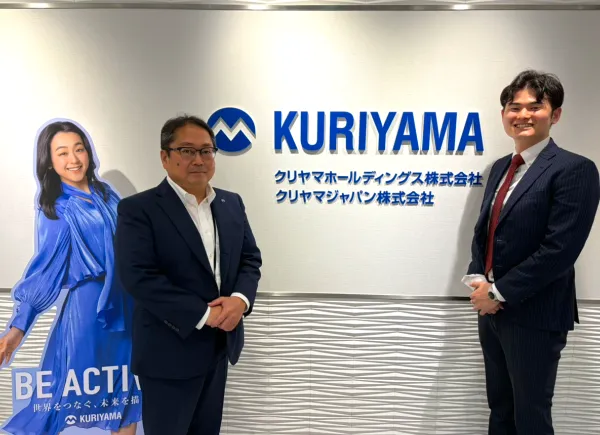
In the financial industry, amid an ongoing digital shift, AIFUL Corporation made the management decision to reduce the number of physical branches. How did they solve the resulting problem of "lost brand touchpoints" through an OOH advertising strateg? We spoke with Mr. Okada of the Group Marketing Department, Web Marketing Section (formerly the Group Marketing Department, Promotion Section), about the background behind their partner selection.
[Recommended for these kinds of companies and roles]
- ■ Executives and advertising managers concerned about the risk of declining brand awareness
- ■ Companies feeling the limits of digital advertising alone
- ■ Marketing managers struggling with “which agency to entrust”
- ■ Companies seriously considering OOH advertising
Please tell us the background behind launching this large-scale OOH project.
Mr. Okada: AIFUL is currently promoting the closure of unmanned branches. While our web-based customer acquisition efficiency has improved, there was strong concern, even at the executive level, that the “branding-through-familiarity” effect might decline once the branch signage — which had served as a landmark saying “there’s a store here” — disappeared along with the branches. If store signage disappears, our Share of Voice against competitors will certainly decline. This could risk worsening our mid- to long-term brand awareness and, in turn, new customer acquisition efficiency. The strategic goal of this project became maintaining brand touchpoints by redeploying highly efficient OOH nationwide to replace the stores.
Among 8 competing companies, what was the “deciding factor” in choosing our company, which had little track record?
Mr. Okada: In a word, it was “quantity” and “originality.” As for “originality,” naturally, there were overwhelmingly many OOH that only your company could come up with — ones we simply thought were “good.” This project wasn’t limited to the greater Tokyo area but was nationwide, so your coverage rate was a huge help. It wasn’t just about sheer volume — even comparing overlapping OOH proposals from other companies, your company’s prices were often cheaper. For this project we needed 88 OOH, and among the proposals from 8 companies, we ordered by far the most from you — 35 OOH. We never expected it to reach about 40% at the outset.
That said, direct dealings with a newly founded company must have raised some governance concerns. How did you clear your internal review process?
Mr. Okada: Of course, we had a strict internal review. Concerns about payment capacity and track record made the internal hurdles very high. In particular, regarding track record, the president, Mr. Yoshida, came from a TV station background, so he presumably had no experience handling OOH. Honestly, other companies that have handled OOH advertising for many years have higher management capability and experience, and even if the same OOH came up and another company’s price was slightly higher, we were prepared to order from them instead. In other words, your company was at a fairly significant disadvantage.
As you actually proceeded with the transaction, how did you feel about their responsiveness and speed?
Mr. Okada: I found it quite fast. Surprisingly many companies are slow to respond, but your responses were quick. Not just with outdoor advertising, but in general, there tend to be many behind-the-scenes movements — such as coordination with landowners in this case — that advertisers can’t see. Amid that, you thoroughly shared real-time status updates like “we’re working on it right now,” so there was never a situation of unclear silence with no contact. Perhaps because you were aware of your lack of track record, you compensated with the quality of your communication. It was very easy to work with you.
We aim to be a “Better Half” — like a spouse or right-hand partner. Honestly, do you feel we’ve become that Better Half?
Mr. Okada: Honestly, I think we still have a long way to go. Of the entire advertising budget, the portion entrusted to your company is still just a small part of our brand awareness initiatives, so it remains quite low. We haven’t fully shared our overall advertising situation with you end-to-end, nor have we worked to help you understand it. That said, when it comes to OOH alone, you were undoubtedly an indispensable presence.
Finally, please share a message for business owners struggling with brand awareness initiatives or partner selection.
Mr. Okada: I think visualizing the effect of brand awareness is extremely difficult. This is especially true for TV commercials and OOH — it’s a matter of how persistently you try to visualize effects that aren’t as easily quantified as digital marketing. In that sense, I think you need the courage to make decisions on measures — the courage to start with “let’s go with this initiative” against each company’s KPIs, and the tenacity to gather the material needed to judge it. If you keep reviewing each measure one by one while fully using that determination, results should naturally follow. Regarding this partner selection, honestly, I think our case is unusual. Normally, even for OOH, it’s more efficient to consolidate everything with a single agency, and asking too many companies can create communication loss. It depends on what you’re looking for in an agency, but for us, quantity and speed were what mattered. In Brand New’s case, I felt they were a company willing to work hard even on things they had no experience with, and your company was undoubtedly a great help to us.
Thank you very much, Mr. Okada, for the interview despite your busy schedule!
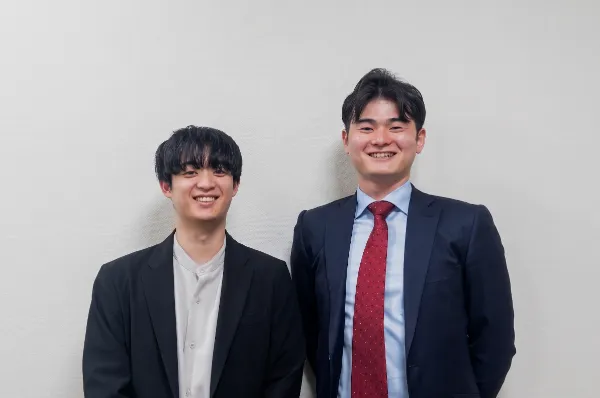
(In the photo, from left: Mr. Okada and our company’s president, Yoshida)
Interviewed April 2026